
By: CJ Starke, PE, Project Manager

Recent weather events, including historic snowpack in parts of the Sierra Nevada, remind us that snow loading isn’t just a winter inconvenience, it’s a serious structural concern for commercial buildings. We’re often asked what factors influence snow loads, what happens when they aren’t properly accounted for, and why every region should be prepared.
Snow loading refers to the additional weight that snow applies to a structure. For commercial buildings, this can present a significant design challenge. Unlike residential structures, commercial facilities often feature large flat or low-slope roofs with high parapets where snow can accumulate without shedding quickly. Snow load design criteria directly impact structural framing, roofing systems, and safety.
When a structure is not properly designed to handle snow loads, serious consequences, including roof sagging, structural damage, and even collapse, can occur. In some cases, building designs and risk management plans include thresholds that trigger active snow removal once accumulation reaches a certain depth or weight, helping reduce stress on the structure. Recent heavy winter storms in areas like South Lake Tahoe highlight the devastating effects when snow loads become extreme. Reports show commercial roofs partially or fully collapsing under snow weight after multiple feet of snowfall and additional moisture from rain events. Several buildings, including grocery stores and other commercial facilities, required closure and red-tagging due to structural concerns.
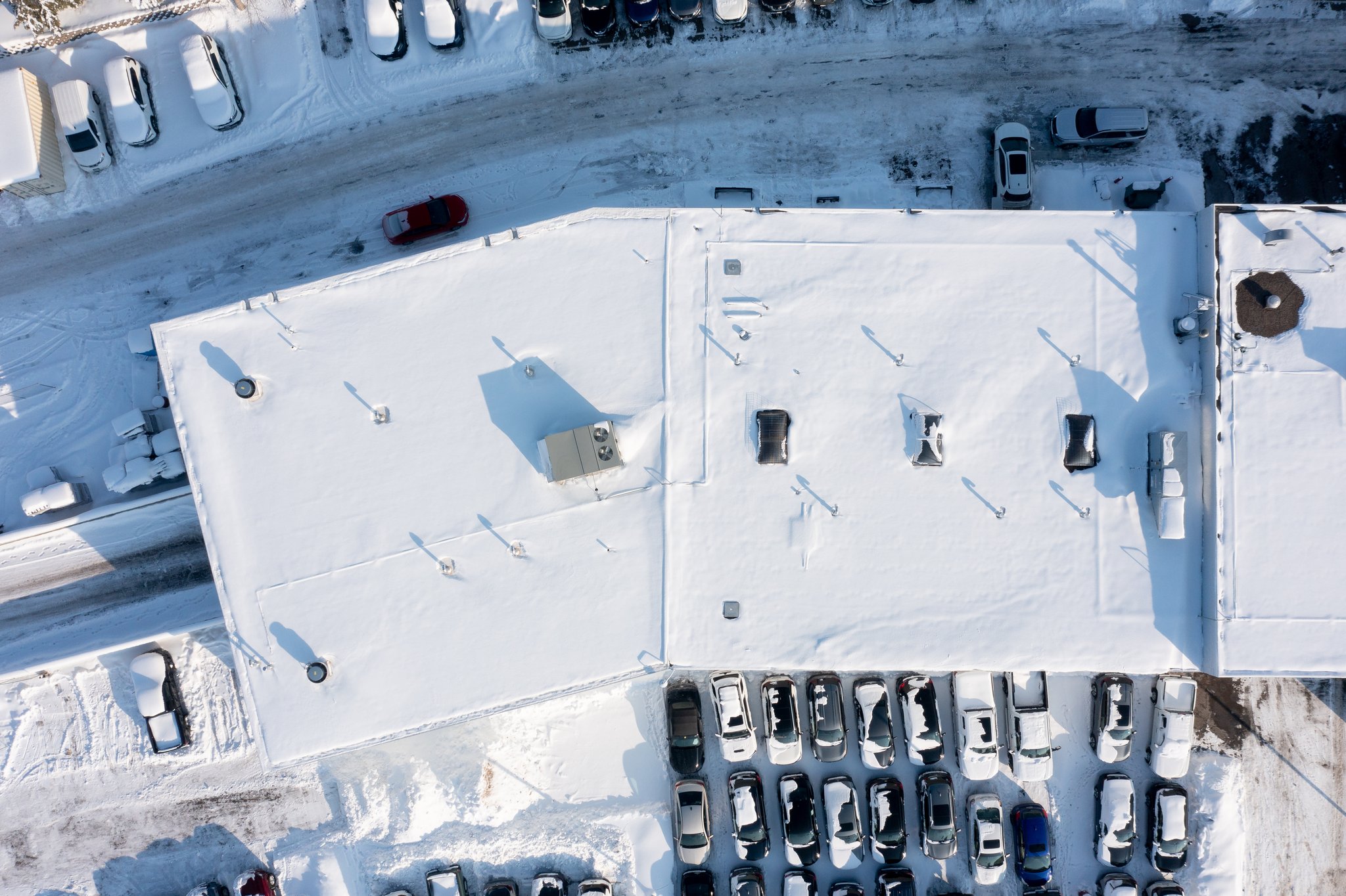
The severity of snow loading depends on several environmental and meteorological factors:
Ice accumulation behaves much like heavy snow. When free-standing water freezes on a roof or accumulates within roof penetrations and drains, additional weight is applied to structural framing. Ice also increases the chance of moisture retention or water infiltration, potentially compounding structural and insulation concerns. From a structural perspective, ice load provisions in building codes help guide engineers in designing for these conditions.

Structural engineers use locally adopted building codes and historical climate data to determine design snow loads. Some best practices include:
As weather extremes continue to evolve, snow loading remains a critical consideration for commercial building design and safety. Proactive planning, informed engineering, and a comprehensive understanding of environmental impacts help ensure that commercial structures remain resilient through all seasons. If you have concerns about snow loading or require structural support, the WT Group AEC Structural Engineering Team is here to help.
